
Milk for sickos
The symbolism of milk on screen and IRL

Life really did imitate art this week: milk has become a symbol of perversion and villainy on screen so it feels very on the nose that the real life villainous sickos in the Trump administration spent the week posting about how whole milk is Back now, and decidedly anti-woke.
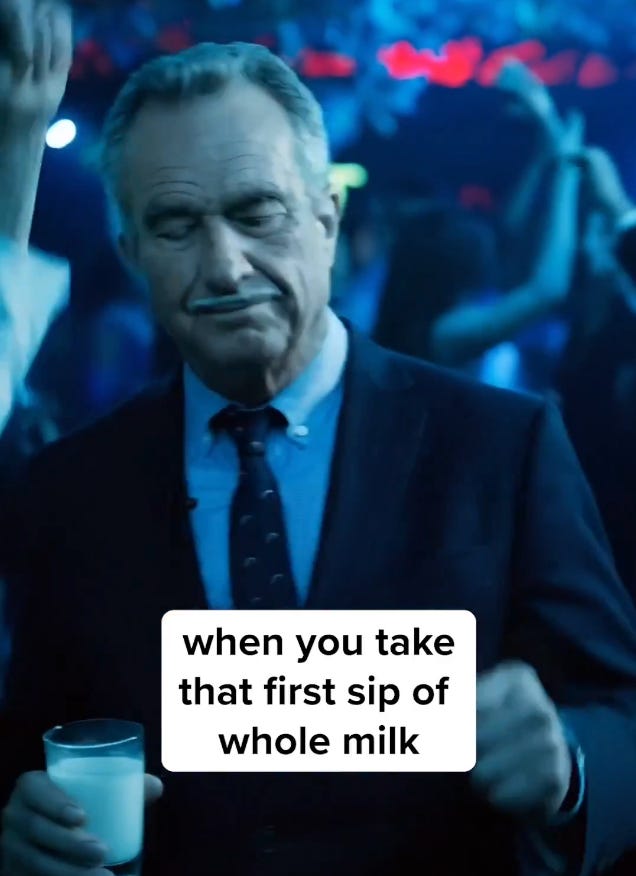
The campaign for the retvrn of whole milk took the form of a series of AI generated images and videos which, like all AI generated videos, have a creepy, uncanny valley feel to them. The one featuring RFK Jr is bizarre—there is something jarring and infantilizing about seeing a grown man drinking a glass of milk. More sinister is the video featuring children who look like they’re being held hostage in a basement while drinking milk. These videos were launched alongside Got Milk-esque videos featuring a handful of MAGA grifters and images of Donald Trump as a milk man under the slogan ‘Make Whole Milk Great Again,’ amongst other things. This slopaganda has been circulated not only on RFK Jr’s Twitter account but also via the official accounts of The White House, the HHS, and the Dept of Agriculture, touting the “return” of whole milk as a major win for Americans.
While I was watching these videos I couldn’t help but think about Homelander, the fascist supervillain from The Boys. The RFK video specifically feels like something that could literally be in The Boys, with Homelander replacing the brainworm-addled Secretary of Health. Homelander is riddled with mommy issues that manifest in a fetishistic obsession with drinking milk. It’s one of his most unsettling habits, which says a lot considering his tendency to commit shameless acts of unspeakable violence.
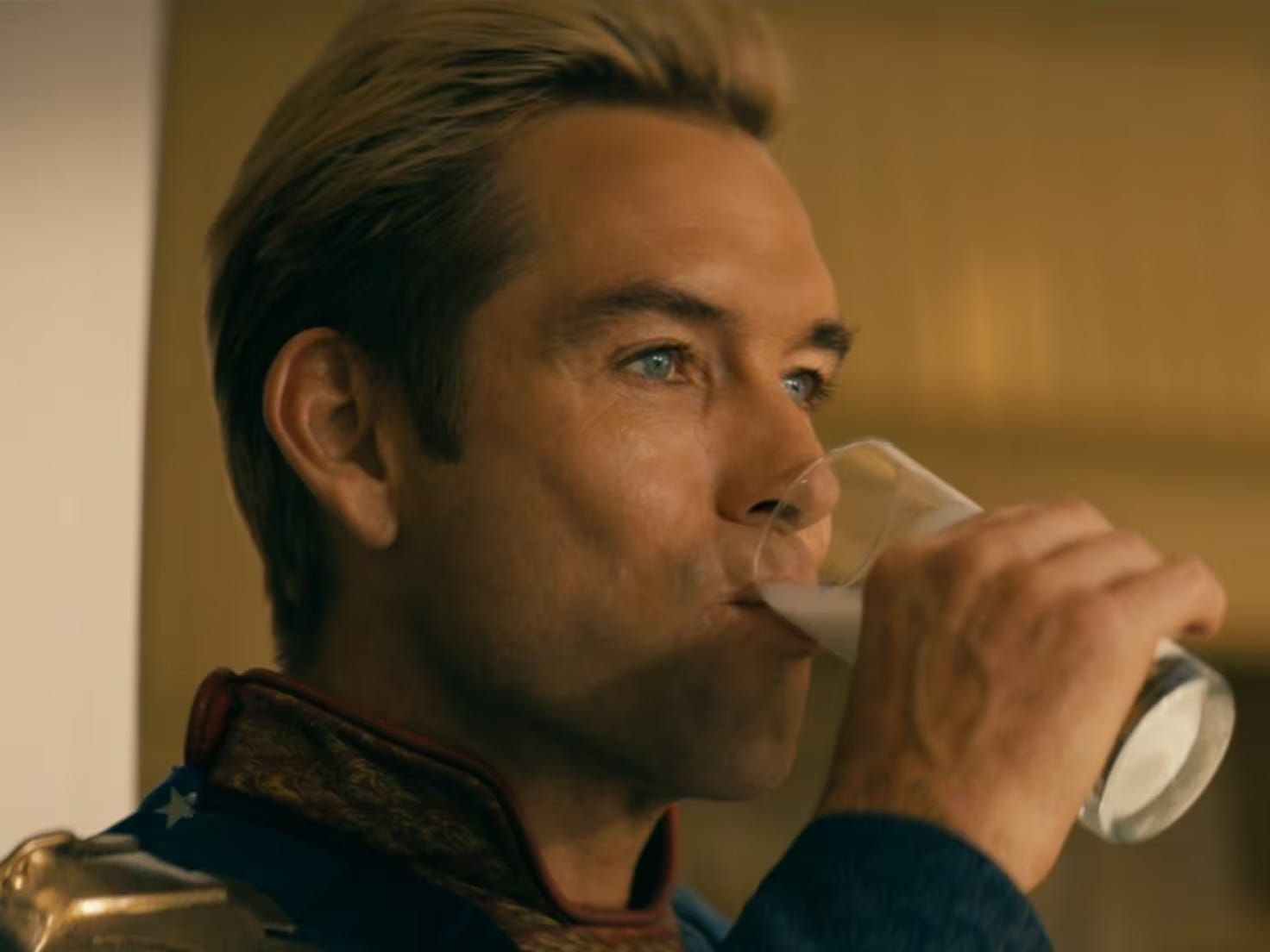
He is far from the first onscreen villain to be pictured menacingly drinking milk: he is in the company of Inglorious Basterds’s Hans Linda, No Country for Old Men’s Anton Chigurh, A Clockwork Orange’s Alex DeLarge, Get Out’s Rose Armitage. Hitchcock regularly depicted milk in his movies as an everyday object with a dark side, subverting its mid-century image as a symbol of domesticity, nutrition, and purity into something ominous. Milk is associated with the nurturing relationship between mother and infant child and, like Homelander, a preoccupation or aversion to it often betrays a character’s mommy (and sometimes daddy) issues or infantilization. Jordan Peele purposely included the milk scene in Get Out for that reason, saying that it’s meant to show Rose (Allison Williams) as “emotionally stunted”, but also says that milk is inherently “kind of horrific…think about what we’re doing.” The emotionally stunted aspect is also true for Victor Frankenstein in Guillermo del Toro’s recent Frankenstein adaptation, as he is shown drinking milk while the people around him drink wine, a disturbing tip off to his naive and dangerous hubris.


Presumably, the Trump administration has chosen whole milk as their newest crusade in the culture war not to signal their own villainy, but as a white supremacist dog whistle, a cultural and gastronomic nod to their quest to ‘Make America Great Again.’ They are attempting to tap into that image of purity and domesticity, rather than subvert it as so many directors have. The goal of the campaign is to call for a return to a time like the 1940s, when the average American was drinking more than a pint of milk a day.
People online are spectating that this campaign for whole milk was supposed to be a campaign for raw milk, which has become its own dog whistle for the alt-right in its misguided insistence against government intervention (or whatever it is that they’re all about), but whole milk accomplishes the same thing and has an even longer history of doing so. White supremacists have long clung to the idea that white Europeans’ genetic tendency to digest milk in adulthood more easily than people from other parts of the world is clear proof of their superiority, a belief which dates back to the late 19th century but became especially popular in America in the 1920s and 1930s. (Dr. John Novembre, an evolutionary biologist, says that this type of research is “wrapped in numerous caveats” and that the nuance is likely to be lost and twisted, which is exactly how it became a white supremacist talking point.)
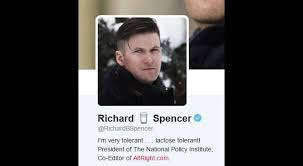
During Trump’s first term, the alt-right became infatuated with this belief, guzzling milk at ‘Milk Parties’ in order to prove their so-called genetic purity. Richard Spencer, the creator of the term ‘alt-right,’ used to have the milk emoji in his Twitter bio, along with a statement about his lactose tolerance. Milk’s white color and mid-century nostalgia only added to the white supremacist romance with the drink, which Trump is now explicitly trotting out and writing into policy.
Again, I think of Homelander! The actor behind the man, Anthony Starr, said in an interview that Homelander’s obsession with milk is completely oedipal, so it seems to be just a happy accident that the writers incorporated a white supremacist calling card into their white supremacist villain, but realistically these things are not separate. Homelander’s mommy issues are entwined with his fascist beliefs; I imagine that a significant number of men who hate women hated their moms first, both onscreen and in real life. The white supremacist obsession with milk is a kind of consumption that is also destruction—of women, of immigrants and people of color, of modern liberties they feel have come at their expense. They guzzle down a symbol of nourishment, domesticity, and maternity, and in doing so twist and destroy it.
Mina Le has a great video essay about milk, I think you might like it. Great analysis!
Brilliant analysis connecting the milk imagery acrossfilm to current political symbolism! The way you traced the pattern from Hitchcock through Homelander to the MAGA milk campaign is really sharp. Never realized how consistent the emotionaly stunted villain trope is until seeing them all lined up. The white supremacist lactose angle adds a whole other disturbing layer I hadn't considered.